Gasket vs Seal: Static and Dynamic Sealing Compared
Home » Gasket vs Seal: Static and Dynamic Sealing Compared
3 Sep, 2026
Gasket vs Seal: Static and Dynamic Sealing Compared
Ask five people on a job site to explain the difference between a gasket and a seal, and you’ll likely get five different answers. Understanding gasket vs. seal terminology and where static and dynamic sealing fit into it matters when you’re specifying the right component for a job.
This guide covers what separates a gasket from a seal, how static and dynamic sealing differ, and which materials suit each.
Quick Answer
A gasket is one type of seal: a compressed material sitting between two stationary surfaces. Seal is the broader term, covering gaskets, O-rings and shaft seals alike.
The distinction that actually affects your material choice is static vs dynamic seal, and whether the sealed surfaces stay still or move relative to each other.
Static seals, including most gaskets, rely on compression and chemical resistance to hold their seal over time.
Dynamic seals require low friction and wear resistance to handle motion, such as a rotating shaft or a reciprocating piston.
What’s the Difference Between a Gasket and a Seal?
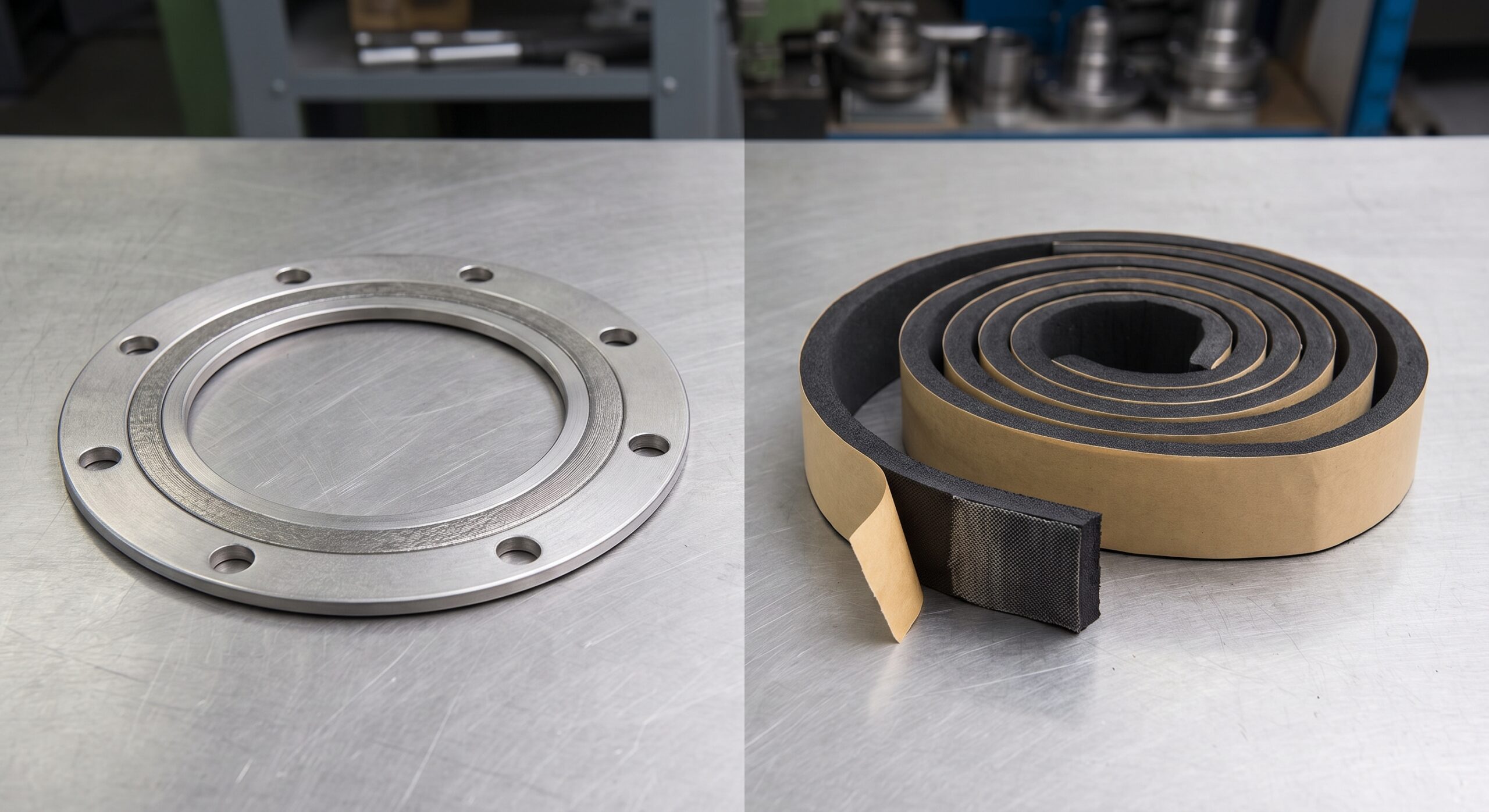
Every gasket is a seal, but not every seal is a gasket. A gasket is a sealing component fitted between two mating surfaces, typically a flange, cover or housing, that remains stationary once the joint is assembled.
Seal is the umbrella term. It covers gaskets as well as O-rings, lip seals, shaft seals and mechanical face seals, some of which move with the equipment rather than sitting fixed in place. Working out whether a gasket vs seal is better in practice depends on whether you’re dealing with a stationary joint or one with moving parts.
Static vs Dynamic Seal: Where the Real Difference Lies
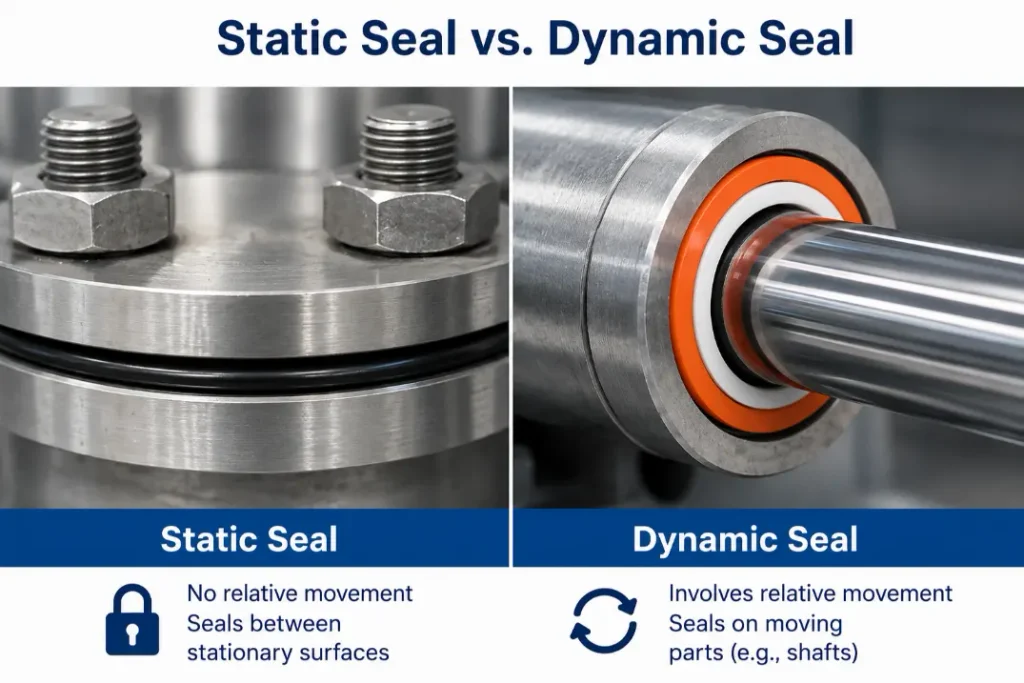
This is where sealing choices actually get made. A static seal sits between surfaces with no relative motion, such as a flange joint, valve cover, or tank lid, and needs to maintain compression while resisting the pressure, chemicals and temperatures it is exposed to.
A static vs dynamic seal comparison comes down to motion. Dynamic seals handle surfaces that move against each other, like a pump shaft, a cylinder rod, or a valve stem. That motion introduces friction, heat and wear that a static seal never has to deal with, so dynamic seal materials need to flex, resist abrasion and hold their shape under repeated cycles.
Factor
Static Seal
Dynamic Seal
Relative motion
None
Continuous or intermittent
Common examples
Flange gaskets, valve covers, tank lids
Shaft seals, cylinder rod seals, valve stems
Key material properties
Compression set resistance, chemical resistance
Low friction, wear resistance, flexibility
Typical materials
EPDM, neoprene, compressed fibre, PTFE
Nitrile, silicone, polyurethane, PTFE
Common failure mode
Creep relaxation, bolt load loss
Abrasive wear, heat buildup
Choosing the Right Material for the Job
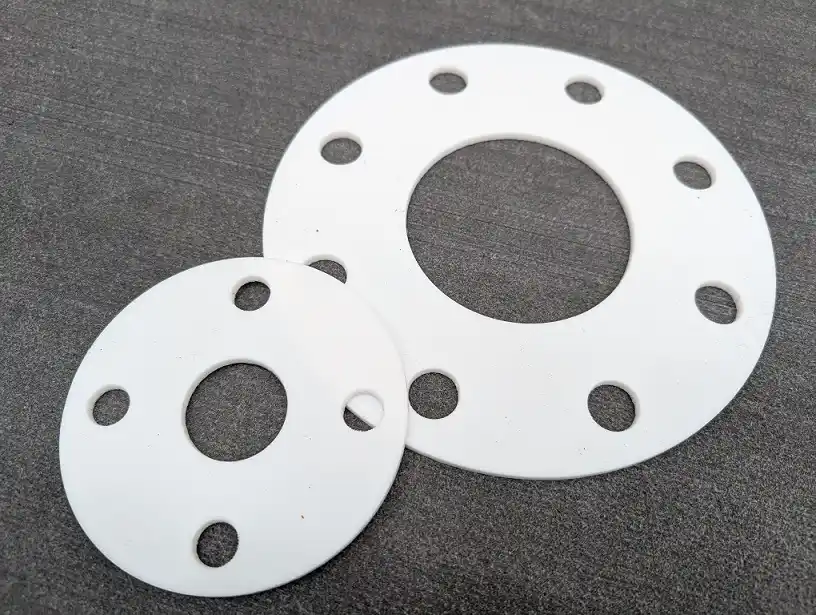
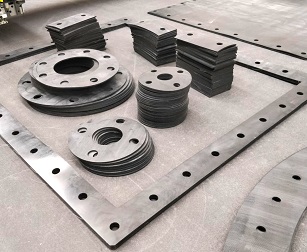
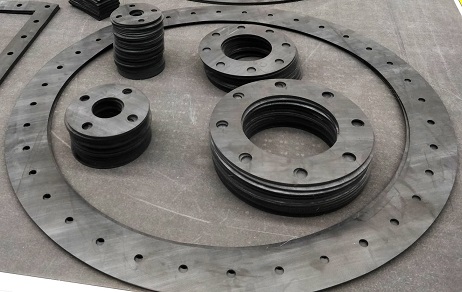
For static gaskets, EPDM and neoprene rubber cover most general industrial and water-exposed applications, while compressed fibre and PTFE are suited to more demanding pressure, temperature, and chemical conditions, depending on the specified grade. A properly specified rubber gasket manufacturer should match the material to your flange rating and media without you having to guess.
Nitrile and polyurethane are widely used in dynamic sealing, particularly for reciprocating applications, with the seal profile and material selected to suit the speed, friction and operating conditions. Where wear resistance and dimensional stability matter more than elastomeric flexibility, engineering plastics are often the better fit.
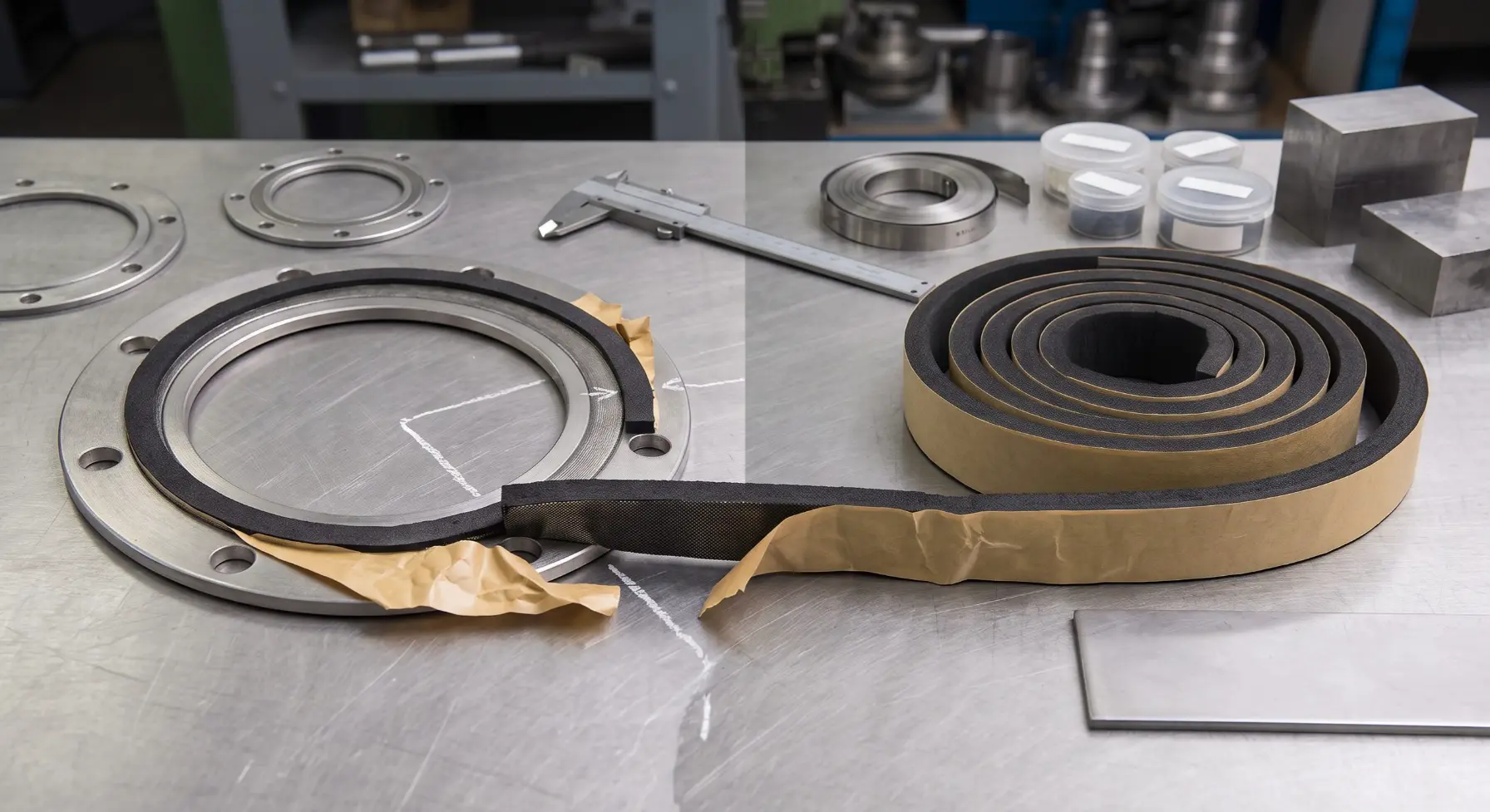
Not every sealing job is one or the other. Enclosure doors, electrical housings, and HVAC ductwork often use adhesive foam tape as a compression-based static seal, closing gaps without the rigidity of a cut gasket.
Sourcing the Right Seal for Your Application
Whether you need a static gasket for a flange connection or a dynamic seal for rotating equipment, getting the material and format right the first time avoids premature failure and downtime. Browse our full range of industrial gaskets or request a quote and we’ll help you match the right product.
Shipping Australia-wide
At Industrial Experts, stock gaskets ordered before 12pm AEST ship the same day from our Melbourne facility, while most custom jobs go out within 1 to 3 business days. From there, delivery timeframes depend on where you’re located. As a general guide:
State
Estimated Delivery
Victoria (VIC)
Around 1–5 business days
New South Wales (NSW)
Around 2–8 business days
Australian Capital Territory (ACT)
Around 2–5 business days
South Australia (SA)
Around 2–9 business days
Tasmania (TAS)
Around 3–10 business days
Queensland (QLD)
Around 4–12 business days
Western Australia (WA)
Around 6–15 business days
Northern Territory (NT)
Around 7–16 business days
Metro hubs sit at the faster end of these ranges, with regional and remote or mine site locations taking longer. Treat these as a general guide, since delivery depends on your exact location, stock availability and courier schedules on the day.
Talk to the Industrial Experts
Not sure whether your application calls for a static gasket or a dynamic seal? Industrial Experts stock a full range of static and dynamic sealing materials and custom-cut both in-house with CNC precision, at prices that stay competitive without compromising on quality.
Contact us on 0400 762 823 and our team will talk it through with you before you order, with fast turnaround on stock and custom orders alike.




 28 Oct, 2025
 5 Nov, 2025