Insertion Rubber vs Plain Rubber Sheet: What Is the Difference?
Home » Insertion Rubber vs Plain Rubber Sheet: What Is the Difference?
2 Aug, 2026
Insertion Rubber vs Plain Rubber Sheet: What Is the Difference?
If you’re sourcing rubber gasket material for an industrial application, you’ve probably come across both insertion rubber and plain rubber sheet. They look similar, are often available in the same compounds, and are both cut into gaskets and seals. So what’s actually different between them, and does it matter?
It does. Choosing the wrong one can mean premature failure under pressure, dimensional creep, or a gasket that won’t hold its shape after a few thermal cycles. Here’s a straightforward breakdown.
Quick Answer
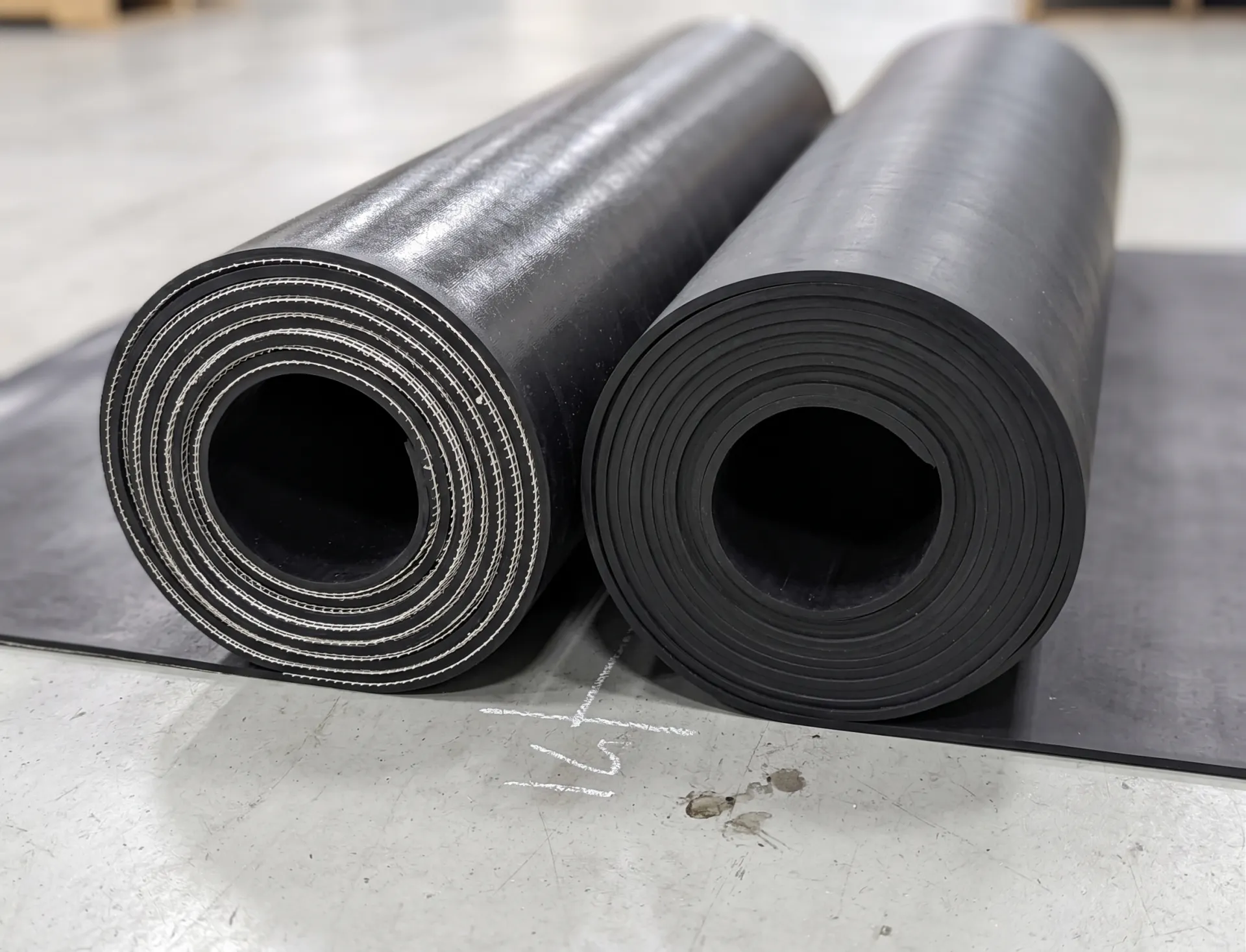
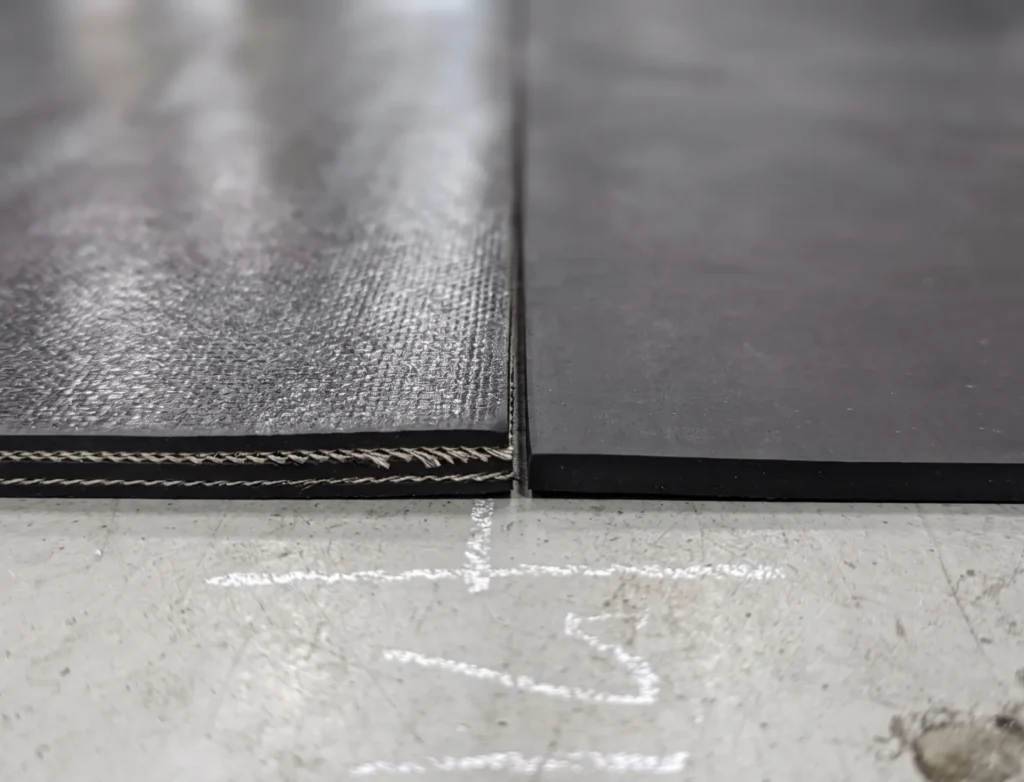
Insertion rubber has a layer of fabric (usually cotton, nylon, or polyester) embedded through its centre. This is what gives it greater tensile strength and tear resistance
Plain rubber sheet contains no reinforcement. It’s more flexible and better suited to applications requiring softer compression or conformability
Insertion rubber is the better choice for gaskets, seals, and load-bearing applications; plain sheet suits lighter-duty or food-contact uses
Both come in multiple compounds (neoprene, nitrile, EPDM, SBR), so material selection still applies on top of the reinforcement choice
What Is Insertion Rubber?
Insertion rubber is a rubber sheet with one or more layers of fabric embedded during manufacture. The “insertion” refers to this fabric insert or inlay running through the middle, with rubber on either side.
The fabric reinforcement enhances the tensile strength, tear resistance, and overall durability of the rubber material. It also provides improved dimensional stability, making insertion rubber less prone to stretching or warping under load or temperature variations.
The fabric layer is typically cotton, polyester, or nylon, or a blend. You won’t see it from the outside; insertion rubber has a smooth, shiny plate finish on both sides. But that internal structure makes a significant difference to how it performs under load.
What Is a Plain Rubber Sheet?
Plain rubber sheet is exactly what it sounds like: solid rubber with no internal reinforcement. Plain rubber does not contain fabric reinforcement and is more flexible but less resistant to deformation under load.
That flexibility is useful in the right context. Plain sheet conforms more readily to irregular surfaces and compresses more evenly at lower bolt loads, making it a good choice for lighter-duty gasketing, vibration damping, and applications that require a softer seal. Silicone rubber sheet, for example, is widely used in food and beverage applications in its plain (unreinforced) form due to its FDA compliance and temperature range.
What Is Insertion Rubber Used For?
Insertion rubber is widely used across industries where gaskets and seals are subject to mechanical stress, pressure, or dimensional demands. Common applications include:
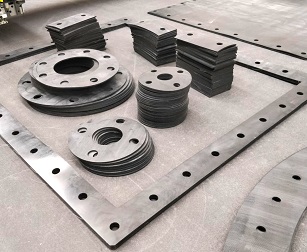
Flange gaskets and pipe seals, where the sheet must hold its shape under bolt compression without flowing or extruding
Industrial padding and vibration dampening, due to its cushioning properties, insertion rubber finds use in shock absorption pads and vibration dampeners
Vehicle mud flaps and door skirts. Common applications also include vehicle mud flaps, worktops, toolbox tops, and car boot mats
Heavy machinery wear pads where abrasion resistance and structural integrity under load matter
In mining, oil and gas, wastewater, and marine industries, insertion rubber is regularly specified for rubber gasket applications because it maintains its dimensions in service, even under temperature cycling and mechanical vibration.
How Do They Compare?
Property
Insertion Rubber
Plain Rubber Sheet
Tensile strength
Higher
Lower
Tear resistance
Higher
Lower
Dimensional stability
Better
More prone to creep
Flexibility
Moderate
Higher
Conformability
Lower
Better
Typical use
Gaskets, seals, load pads
Light seals, food contact, dampening
Choosing the Right Compound on Top of Reinforcement
Once you’ve decided between insertion and plain sheet, the next decision is compound selection. Both formats are available in a range of rubber types:
Neoprene rubber: Good all-round resistance to oil, weather, and ozone; commonly used in marine and refrigeration applications
Nitrile (NBR): Excellent oil and fuel resistance; well-suited to mining and automotive sealing
EPDM: Outstanding weathering, UV, and ozone resistance; widely used in water treatment and outdoor applications
SBR: Cost-effective general-purpose option with good abrasion resistance
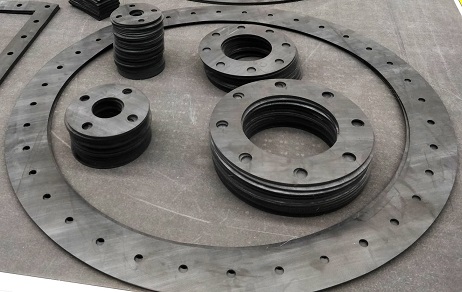
The right compound depends on what your seal is in contact with — temperature range, media, and any chemical exposure are the key variables. If you need something non-standard or food-safe, custom rubber gaskets can be cut to specification from the compound that best suits the duty.
Which Should You Use?
If your application involves a gasketed joint, flanged connection, or any situation where the seal needs to hold its shape under bolt load, insertion rubber is generally the better call. The dimensional stability means the gasket won’t creep or extrude under compression, and the added tear resistance makes it more forgiving during installation and handling.
If you need a softer seal, a thinner cross-section, or a food-grade application where conformability matters more than mechanical strength, plain rubber sheet is often the right answer. For food and beverage applications, a plain silicone rubber sheet in a white FDA-approved grade is worth considering over insertion rubber.
When in doubt, the application parameters should drive the decision, not just the material format.
Quality Rubber Options For All Applications
Industrial Experts is an industrial seal and gasket supplier that offers both insertion rubber and plain rubber sheet in SBR, nitrile, EPDM, and neoprene grades, cut to size or supplied in full rolls.
Industrial Experts ships Australia-wide. Shipping times to all states are currently:
Small quantity: Same or next day (in-stock items ordered before 12pm dispatch same day)
Bulk quantity: 3-5 business days
All customised gaskets are cut in-house, with most custom jobs shipping within 1–3 days. Contact the team at sales@industrialexperts.com.au or 0400 762 823 to discuss your requirements.




 28 Oct, 2025
 5 Nov, 2025