Home » What Industries Still Use Paper Gaskets and Why
30 May, 2026
What Industries Still Use Paper Gaskets and Why
Walk through any engine workshop, pump rebuild bay, or appliance assembly line in Australia, and you’ll find paper gaskets quietly doing the same job they’ve been doing for decades. PTFE, graphite, and spiral wound gaskets get most of the attention in technical specs. But for low- to moderate-pressure sealing of oils, fuels, water, and coolants, paper gaskets remain the most cost-effective, easy-to-install option on the market.
So, why are engineers and maintenance teams still specifying them in 2026? Because in the right conditions, nothing else makes sense. The material is cheap to produce, easy to cut, conforms beautifully to imperfect flange surfaces, and seals reliably under modest bolt loads. Trying to replace it with a fancier alternative often means paying more for performance than you need.
This article walks through the industries still relying on gaskets, the specific applications driving that demand, and why the material continues to earn its place in modern industrial sealing.
Important Takeaways:
Paper gaskets remain the default choice for low- to medium-pressure sealing of oils, fuels, water, coolants, and alcohols up to around 120°C.
Automotive, marine, agricultural, HVAC, and general industrial machinery are the heaviest users.
Their low cost, high conformability, and compatibility with most fluids make them ideal for high-volume, low-risk applications.
Modern paper gasket material is typically cellulose fibre bonded with nitrile rubber, giving it solid oil and fuel resistance.
For high-temperature or high-pressure service, CNAF, PTFE, or spiral-wound alternatives take over.
What Are Paper Gaskets Made Of?
The term “paper gasket” is a bit misleading. Modern versions aren’t just compressed paper. They’re cellulose fibre sheets impregnated with binders such as nitrile rubber (NBR), gelatine, or synthetic resins to improve their oil, fuel, and water resistance.
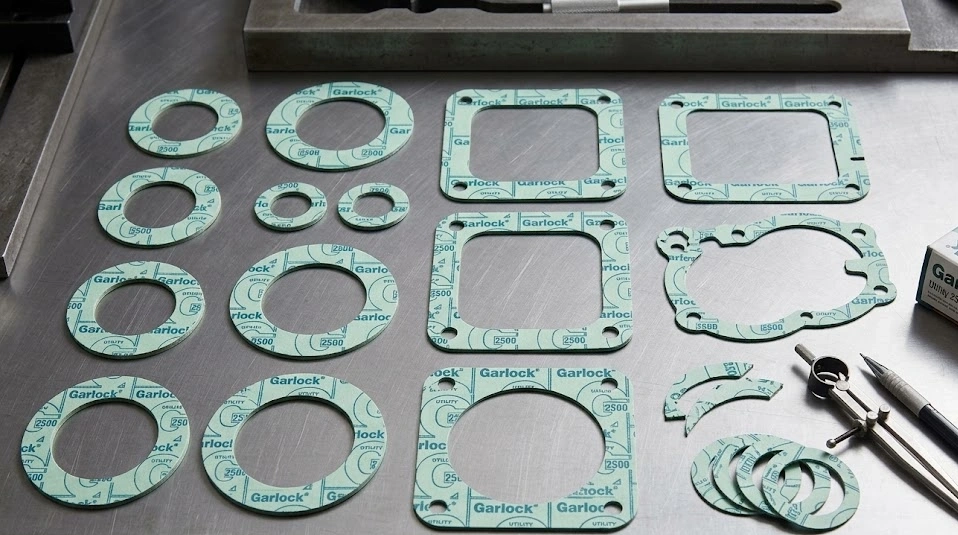
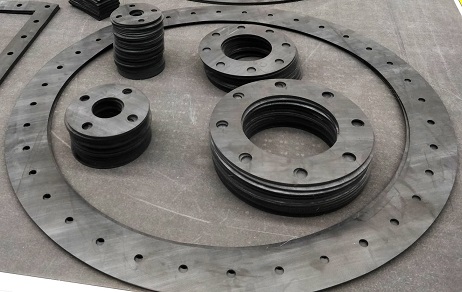
Common trade names include Flexoid, Vellumoid, Gaskoid, and oil jointing paper. They’re typically supplied in thicknesses from 0.15mm to 6.4mm, in 1m sheet sizes, making them easy to stock and cut to any shape on demand.
Operating limits are around 120°C and pressures of 10-15 bar, depending on grade and thickness. That sounds modest compared to spiral-wound or PTFE options, but it covers a wide range of real-world industrial sealing requirements.
Why Industries Still Choose Paper Gaskets
Before getting into the specific sectors, it helps to understand why this material keeps winning out over newer options.
Cost
Paper gasket sheet is one of the cheapest sealing materials per square metre. For high-volume production runs of small components, the savings compound fast.
Conformability
The material compresses easily and fills minor surface irregularities without needing high bolt loads. That suits older equipment, cast housings, and stamped sheet metal covers where flange faces aren’t perfectly machined.
Cuttability
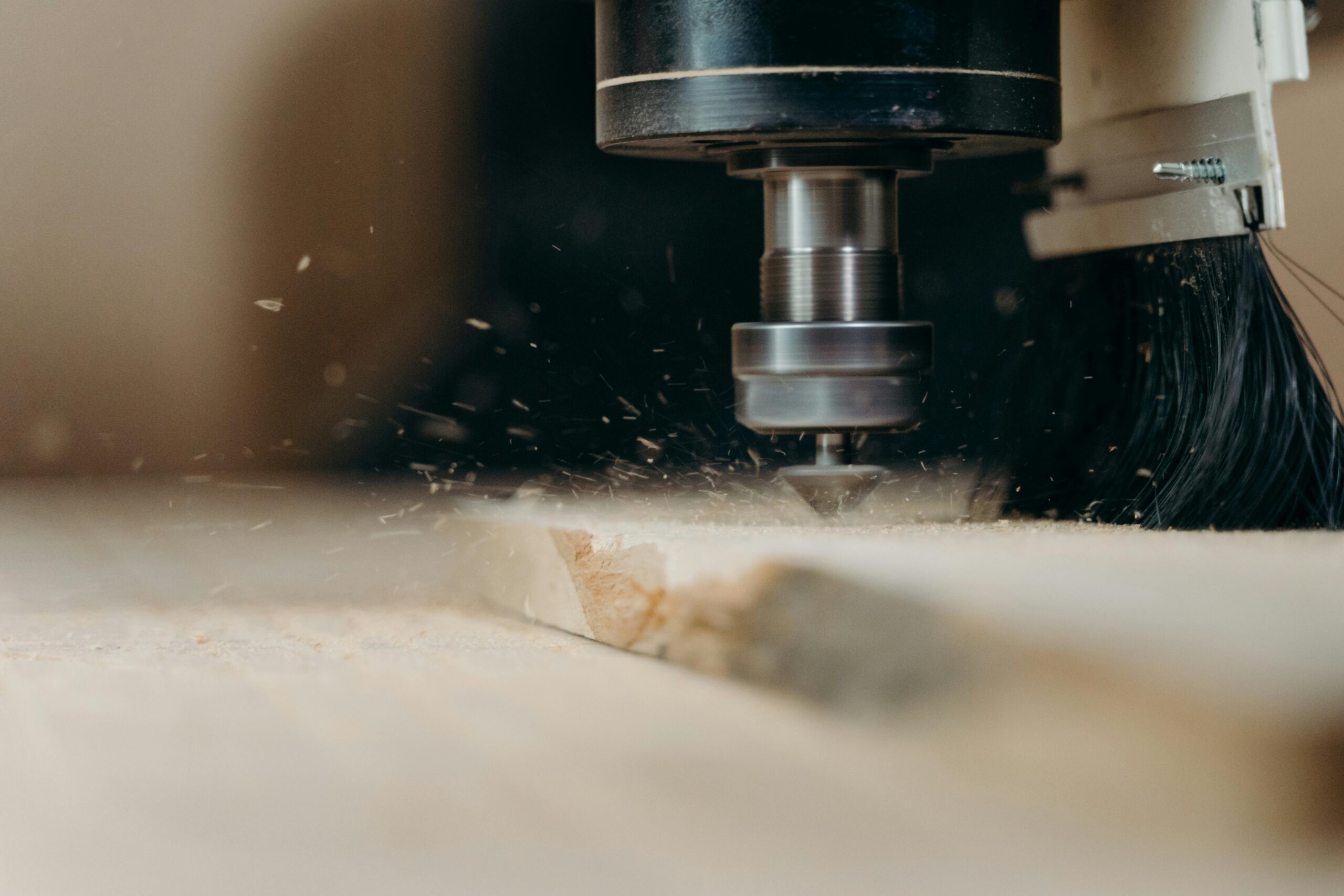
Paper is fast and clean to cut on a CNC oscillating knife or clicker press. Custom shapes, bolt patterns, and one-off prototypes turn around in hours, not days, which is why many of our custom gasket jobs are paper-based.
Chemistry
Modern oil-impregnated cellulose handles petrol, diesel, mineral oils, water, alcohols, glycols, and most light hydrocarbons without swelling or breaking down.
Familiarity
Mechanics, fitters, and assembly line workers have been installing this style of seal for over a century. There’s no learning curve.
For a comparison of how paper stacks up against fibre, rubber, PTFE, and graphite alternatives, our guide to industrial gaskets covers the trade-offs in detail.
Automotive: The Largest User of Paper Gaskets
In automotive sealing, paper gaskets truly dominate. You’ll find them on:
Oil pans and sumps
Valve covers (rocker covers)
Water pumps
Fuel pumps and carburettors
Oil filter housings
Timing covers
Gearbox and transmission covers
Differential housings
These applications run at moderate temperatures with engine oil, coolant, or fuel as the sealed media. Pressures are low, bolt loads are limited (especially on stamped covers), and cost matters when you’re producing thousands of units a week.
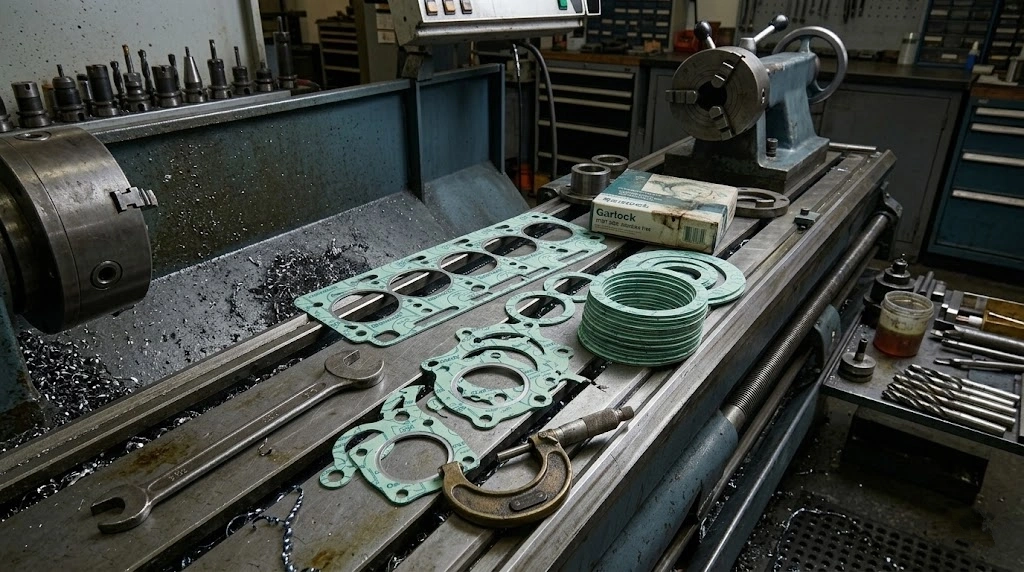
Workshops servicing classic cars, fleet vehicles, and agricultural machinery rely on custom-cut sealing parts to replace original components that are no longer available off the shelf. With a CAD drawing or a damaged sample, a competent supplier can have replacements cut and dispatched within 24 hours.
Marine: Engines, Pumps, and Auxiliary Systems
The marine industry sits right alongside automotive in usage. Inboard and outboard engines, raw-water pumps, fuel systems, and gearboxes all use paper gaskets in ways similar to those in road vehicles. The wet, salty environment doesn’t bother oil-impregnated cellulose. The material won’t corrode, and replacement parts can be easily fabricated dockside if a vessel is laid up.
Commercial fishing fleets, ferries, and pleasure craft operators all keep oil jointing paper sheets on hand for in-field repairs.
Agricultural Machinery
Tractors, harvesters, spray rigs, and irrigation pumps put heavy demands on sealing materials. The operating environment is dusty, vibration-heavy, and often involves long hours of low- to medium-load operation. Paper gaskets perform well here because:
They handle engine oils, hydraulic fuels, and diesel without breakdown
They tolerate the rough flange surfaces typical of cast iron components
They’re cheap enough to keep on the shelf for seasonal maintenance
Replacement cost stays low for fleet operators servicing hundreds of machines
Australian farms running older Massey, John Deere, and Case IH equipment regularly source custom gaskets cut from cellulose fibre sheet to keep ageing machinery in service.
Household Appliances and HVAC
Inside refrigerators, air conditioners, ovens, dishwashers, and washing machines, this style of gasket seals compressor housings, valve bodies, blower casings, and motor mounts. The conditions are mild: room temperature, low pressure, mostly dry. Manufacturers choose paper because the cost per unit at production scale matters more than premium chemical resistance.
HVAC contractors also use paper gasket material for ductwork flanges, fan housings, and blower assemblies in commercial buildings.
Pumps, Compressors, and General Industrial Machinery
Centrifugal pumps, gear pumps, reciprocating compressors, and screw compressors used in water treatment, food processing, and general manufacturing often rely on this material for:
End covers and bearing housings
Low-pressure suction and discharge port flanges
Pump base mounts
Inspection covers
For ongoing maintenance programs, having a paper gasket sheet on hand means a fitter can cut a replacement on the spot rather than waiting for a courier. It’s why so many Australian plants stock cellulose sheets alongside their other industrial gaskets.
Electrical and Transformer Applications
Insulating grade gasket papers (sometimes called pressboard or fish paper) seal transformer enclosures, switchgear cabinets, and electrical junction boxes. The dielectric strength of cellulose, combined with its compressibility, makes it useful for sealing oil-filled transformers and weatherproofing outdoor electrical equipment.
Where Paper Gaskets Don’t Fit
Being honest about a material’s limits matters. Paper is the wrong call when:
Temperatures exceed 120°C. CNAF, graphite, or PTFE materials can withstand higher temperatures.
Pressures exceed roughly 15 bar. CNAF or spiral wound options are stronger.
Aggressive chemicals are involved. For concentrated acids, strong solvents, or oxidisers, ePTFE is the better choice.
Steam service is required. Paper degrades; CNAF or graphite is needed.
FDS or food contact compliance applies. White nitrile, EPDM, or silicone is mandatory.
Knowing these boundaries is half the value of working with an experienced supplier. Specifying the wrong material results in leaks, downtime, and costly rework.
Get the Right Gasket for Your Job
Need paper gaskets cut to a specific shape, bolt pattern, or thickness? At Industrial Experts, we stock oil jointing paper, cellulose fibre sheet, and CNAF in a full range of thicknesses, and our in-house CNC oscillating knife cutting service turns around custom gaskets fast.
Send through your drawing, sample, or service spec, and we’ll quote it fast. For urgent breakdowns, call us on 0400 762 823. Paper gaskets aren’t going anywhere. For the application they’re built for, they’re still the smartest, cheapest, most practical sealing solution available.



 28 Oct, 2025
 5 Nov, 2025