How to Choose the Correct Spiral Wound Gasket for Your Flange
Home » How to Choose the Correct Spiral Wound Gasket for Your Flange
26 Mar, 2026
How to Choose the Correct Spiral Wound Gasket for Your Flange
A leaking flange joint can shut down an entire process line – and in the worst cases, it’s a serious safety hazard. More often than not, the root cause isn’t a worn-out seal or a faulty bolt. It’s the wrong spiral wound gasket for the job.
Choosing the right spiral wound gasket comes down to understanding a handful of variables: your flange type, your operating conditions, and the media running through the line. Get those right, and you’ll have a reliable, long-lasting seal. Get them wrong, and you’re looking at downtime, wasted product, or worse, money flushed down the drain.
This guide walks you through each decision point so you know how to choose the right spiral wound gasket for your flange
What is a Spiral Wound Gasket (and Why Does It Matter)?
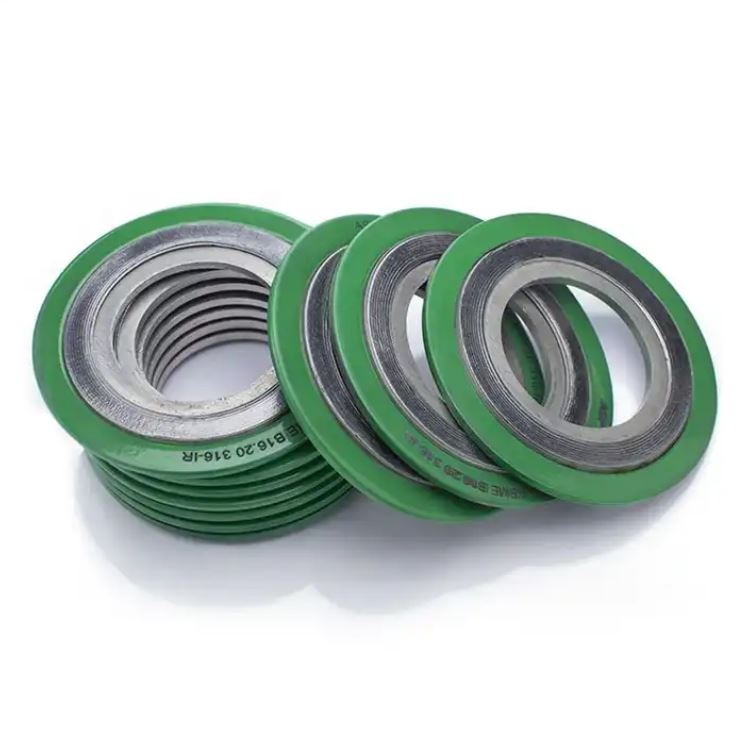
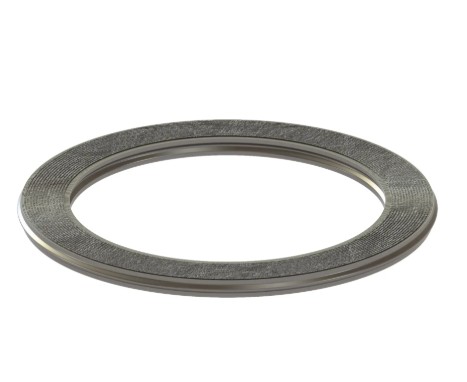
A spiral wound gasket is a type of metallic gasket built from alternating layers of a thin metal strip and a softer filler material, wound together in a tight spiral. That combination is what makes them so effective: the metal gives the gasket strength under pressure, while the filler creates the actual seal.
They’re the most common gaskets used in industrial piping today, particularly in oil and gas, petrochemical, and power generation. If you’ve ever wondered why spiral wound gaskets are the standard for oil, gas, and steam systems, it comes down to one thing: they handle the extremes. High pressures, high temperatures, aggressive chemicals, and the constant expansion and contraction that come with thermal cycling.
Unlike a simple rubber or fibre gasket, a spiral wound gasket can compress under bolt load and then spring back when conditions change. That recovery is critical in systems where temperatures fluctuate throughout the day.
Match the Gasket Style to Your Flange Type
Not all spiral wound gaskets are built the same. There are four main styles, and each one suits a different flange configuration. Picking the wrong style is one of the most common mistakes we see.
1. Style R (Winding Only)
The most basic design. There’s no outer or inner ring, just the wound sealing element. Style R gaskets are designed for tongue-and-groove or male-and-female flange joints where the gasket sits inside a recess. You won’t use these on standard raised-face flanges.
2. Style CG (Centring Ring)
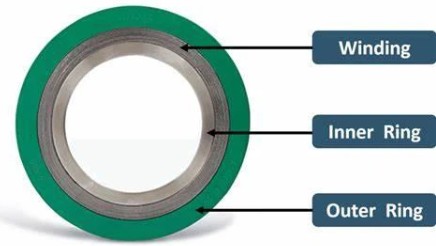
This adds a solid carbon steel outer ring around the winding. The ring centres the gasket on the flange and prevents it from being blown out under pressure. Style CG is the go-to for standard raised-face and flat-face flanges in moderate service conditions.
3. Style CGI (Centring Ring + Inner Ring)
The most common configuration in demanding applications. The outer ring centres the gasket, while the inner ring stops the windings from buckling inward under high bolt loads. Without that inner ring, the winding can collapse into the pipe bore – a problem known in the industry as “bird-nesting.” Style CGI is recommended for high-pressure classes (Class 900 and above), vacuum service, and any application involving toxic or flammable media.
4. Style RIR (Inner Ring Only)
Used on male-and-female flanges where an outer ring isn’t needed, but an inner ring is still required to protect against buckling.
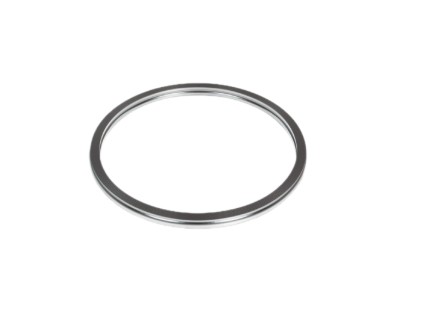
If you’re working with ring joint gaskets (RTJ) flanges and considering a switch, some manufacturers offer spiral wound replacement gaskets designed to fit RTJ grooves – though this is typically a maintenance retrofit, not a design choice.
Quick rule of thumb: If you’re unsure, Style CGI with both rings is the safest option for most raised-face flange applications.
Choose the Right Filler Material
The filler material is what actually creates the seal, so this choice matters. There are two main options you’ll encounter:
Flexible Graphite
The workhorse of the industry. Graphite handles temperatures up to around 450°C (in oxidising environments) and performs brilliantly across a wide range of chemicals. It’s also more forgiving of minor flange surface imperfections and misalignment. For most oil, gas, steam, and petrochemical applications, graphite is the default choice.
PTFE (Teflon)
Best suited for chemical processing where you’re dealing with highly corrosive acids, alkalis, or solvents that would attack graphite. PTFE is chemically inert to almost everything, but it has a major limitation: it doesn’t handle heat well. Most PTFE fillers max out around 260°C, and PTFE is more prone to creep (gradually losing compression over time). ASME B16.20 also requires that all PTFE-filled spiral wound gaskets include an inner ring.
Less common fillers include mica (for extremely high temperatures above 800°C) and ceramic fibre, though you’ll rarely encounter these outside specialty applications.
Get the Winding Material Right
The metal strip in the winding needs to be compatible with the process media. The three most common options are:
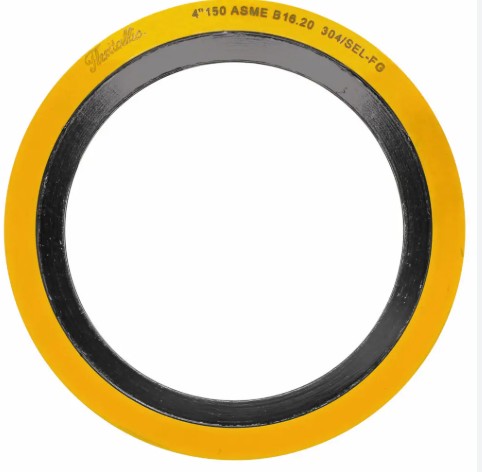
304 Stainless Steel: General-purpose and suitable for most non-corrosive applications. Identified by a yellow outer ring.
316 Stainless Steel: Better corrosion resistance, especially against chlorides and acids. Green outer ring.
Monel (Nickel-Copper Alloy): For the harshest chemical environments and high-temperature service. Orange outer ring.
The colour coding follows ASME B16.20 and makes identification straightforward – even when a gasket has been sitting in a warehouse for months.
If your application requires something outside these standard materials, a custom gasket maker can wind gaskets in Inconel, Hastelloy, titanium, and other exotic alloys to suit specific corrosion or temperature requirements.
Don’t Forget Pressure Class and Size
Every spiral wound gasket is manufactured to suit a specific pipe size (NPS) and pressure class. These must match your flange exactly – there’s no room for approximation here.
Standard pressure classes are:
150
300
600
900
1500
2500
Each corresponds to the ratings in ASME B16.5 and B16.47. A gasket rated for Class 150 service won’t perform in a Class 600 application, even if it physically fits the flange. The dimensions, thickness, and compression characteristics all differ.
When ordering, always confirm three things: pipe size, pressure class, and flange standard. Your spiral wound gasket supplier should be able to cross-reference these details and confirm you’re getting the right gasket for your specific flange.
Consider the Bigger Picture: Flange Isolation
In systems where cathodic protection is in place – which is common in oil and gas pipelines – you may also need flange insulation kits alongside your spiral wound gaskets. These kits electrically isolate the flange joint to prevent galvanic corrosion and ensure your cathodic protection system works as intended. It’s a detail that’s easy to overlook but can save significant maintenance costs down the track.
Quick Selection Checklist
Before you place your next order, run through these points:
Flange type and face finish: Raised face, flat face, tongue-and-groove, or male-and-female?
Pipe size and pressure class: Confirm NPS and class rating match ASME B16.5/B16.47.
Operating temperature: Above 260°C? Use graphite, not PTFE.
Process media: Corrosive chemicals? Consider PTFE filler or upgraded winding material.
Inner ring requirement: Mandatory for PTFE-filled gaskets, Class 900+, and large-bore applications.
Gasket style: When in doubt, go Style CGI.
Get It Right the First Time with Industrial Experts
Choosing the correct spiral wound gasket isn’t complicated – but it does require attention to a few key details. The cost of the gasket itself is almost negligible compared to the cost of a leak, an unplanned shutdown, or a safety incident.
If you’re not sure which gasket suits your application, talk to an experienced gasket distributor like Industrial Experts, who can review your flange specifications, operating conditions, and process media, and recommend the right product for the job.
It’s a five-minute conversation that can save you thousands.





 28 Oct, 2025
 5 Nov, 2025